

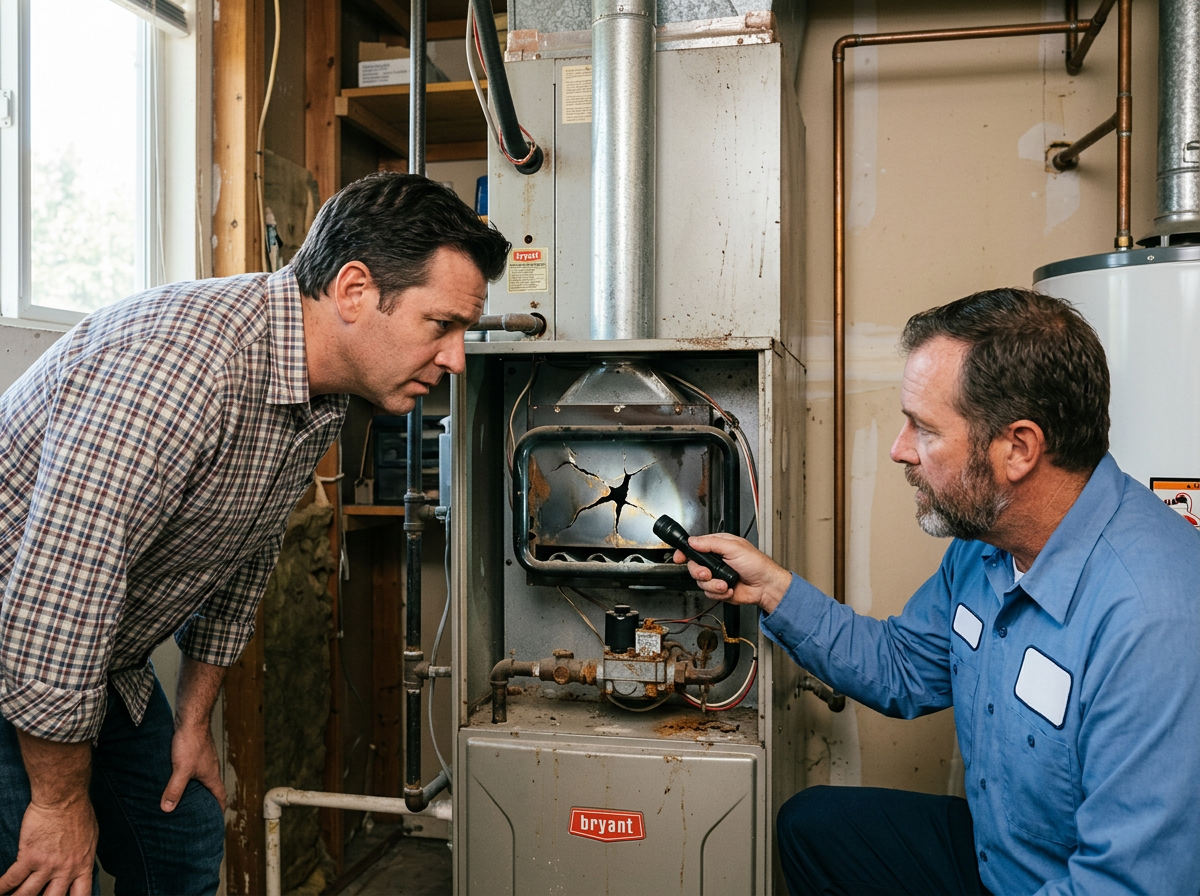
A reliable furnace helps keep a home comfortable during colder weather, but like any mechanical system, it can develop problems over time. Some issues begin with subtle changes in performance, while others can become obvious and potentially dangerous. Recognizing the warning signs early can help homeowners address minor problems before they develop into expensive repairs.
Regular professional maintenance is also important. The U.S. Department of Energy recommends professional furnace or heat-pump maintenance annually and advises homeowners to clean or replace HVAC filters as needed.
1. Your Furnace Is Not Heating Properly
One of the clearest signs of a furnace problem is inadequate heating. If the thermostat is set to a comfortable temperature but rooms remain cold, the system may have an airflow, ignition, thermostat, blower, or other mechanical problem.
Uneven heating is another warning sign. If one part of the house feels warm while another remains consistently cold, the issue may involve the furnace, ductwork, airflow, or thermostat settings.
Rather than continuing to increase the thermostat, homeowners should have the system inspected if the problem persists.
2. Strange Noises Are Coming From the Furnace
Furnaces normally produce some operating sounds, but sudden or unusual noises deserve attention.
Depending on the sound, possible causes can include loose components, blower problems, worn bearings, ignition issues, or airflow restrictions. Grinding, scraping, repeated banging, or persistent rattling should not simply be ignored.
A technician can identify where the noise originates and determine whether a component needs adjustment, cleaning, or replacement.
3. Your Energy Bills Suddenly Increase
A noticeable increase in heating-related energy consumption can sometimes indicate declining furnace efficiency.
A dirty filter, restricted airflow, malfunctioning component, or poorly operating burner can cause a furnace to work harder or run longer than necessary. The Department of Energy notes that clogged filters can reduce airflow, increase furnace operating time, and increase motor wear and energy consumption.
If your household’s heating habits have remained relatively consistent but energy use has changed significantly, a furnace inspection may be worthwhile.
4. The Furnace Turns On and Off Too Frequently
Frequent cycling, sometimes called short cycling, occurs when a furnace starts and stops repeatedly instead of completing normal heating cycles.
Several problems can contribute to this behavior, including restricted airflow, thermostat problems, overheating, or equipment issues. Continual cycling can place additional stress on furnace components.
Checking that the filter is clean is a reasonable first step. If the problem continues, professional diagnosis is recommended.
5. You Notice Weak Airflow
Stand near several supply vents while the furnace is operating. If the airflow feels significantly weaker than normal, the problem could involve a dirty filter, blocked duct, blower issue, or another restriction.
A filter is particularly important because it protects the HVAC equipment while helping maintain appropriate airflow. A clogged filter can make the furnace work harder and may contribute to premature wear.
If replacing an appropriate filter does not restore normal airflow, the system should be inspected.
6. There Is an Unusual Smell
Some odors may occur briefly when a furnace is first operated after being inactive. However, persistent or unusual smells should not be ignored.
A burning odor, electrical smell, or strong fuel-related odor can indicate a problem that requires professional attention. For fuel-burning equipment, combustion and venting are particularly important because malfunctioning equipment can potentially release combustion products into indoor air.
If you smell natural gas, leave the area and follow appropriate emergency procedures rather than attempting to diagnose the furnace yourself.
7. The Pilot Light or Ignition Has Problems
Older furnaces may use pilot lights, while many newer systems use electronic ignition. If the furnace repeatedly struggles to ignite, shuts down unexpectedly, or requires repeated attempts to start, there may be an ignition, sensor, gas-supply, or control problem.
Repeated ignition failures should be investigated by a qualified HVAC professional instead of repeatedly resetting the system.
8. The Thermostat Does Not Match the Room Temperature
Sometimes the furnace itself is working correctly while the thermostat is causing problems.
If the thermostat displays one temperature but the room feels considerably warmer or colder, the thermostat may need inspection. Wiring, calibration, sensor problems, batteries, or communication issues can all affect system operation depending on the thermostat type.
A professional can determine whether the thermostat or the furnace is responsible for the inconsistent temperature.
9. Carbon Monoxide Concerns Require Immediate Attention
Fuel-burning furnaces require particular attention to combustion and ventilation. Carbon monoxide is colorless, tasteless, and odorless, and improperly operating or poorly vented combustion equipment can contribute to indoor CO exposure.
Every home with fuel-burning appliances should have appropriate carbon monoxide alarms, particularly near sleeping areas and on each level of the home.
If a carbon monoxide alarm sounds, leave the home immediately and contact emergency services from outside. Do not remain indoors trying to determine whether the furnace caused the alarm.
10. Your Furnace Is Getting Older and Needs Frequent Repairs
Age alone does not automatically mean a furnace needs replacement. However, an older system that repeatedly requires repairs may deserve a professional evaluation.
Consider the overall pattern:
- How frequently has the furnace required repairs?
- Are replacement parts becoming difficult to obtain?
- Has efficiency noticeably declined?
- Are comfort problems becoming more common?
- Would another major repair represent a substantial portion of replacement cost?
A qualified technician can help distinguish between a straightforward repair and a situation where replacement should be considered.
When to Call for Furnace Repair
Homeowners should generally arrange professional service when heating performance changes noticeably, unusual noises continue, airflow decreases, cycling becomes abnormal, or the furnace repeatedly fails to start.
For homeowners searching for furnace repair Orange County, choosing a qualified HVAC professional can help ensure that the system is properly diagnosed rather than simply replacing parts based on symptoms.
Professional inspection is especially important for gas or other combustion-based furnaces because safe operation depends on proper combustion, ventilation, and exhaust. The Department of Energy emphasizes the importance of correct installation, maintenance, and venting for combustion equipment.
Simple Furnace Maintenance Homeowners Can Do
Although major furnace repairs should be handled by qualified professionals, homeowners can take several basic preventive steps.
Start by checking and replacing the furnace filter according to the equipment manufacturer’s recommendations. Keep supply and return vents unobstructed, make sure the area around the furnace remains clear, and pay attention to changes in heating performance.
Annual professional maintenance is also recommended by the Department of Energy.
Repair or Replace the Furnace?
Not every furnace problem requires replacement. Many issues can be corrected through cleaning, adjustment, component replacement, or other repairs.
Replacement may become a consideration when a system is older, inefficient, unreliable, or repeatedly requires expensive repairs. A professional evaluation can provide information about the furnace’s condition and help homeowners compare the expected cost of continued repairs with the cost of a new system.
Final Thoughts
Knowing the warning signs of furnace trouble can help Orange County homeowners respond before a small problem becomes a larger one. Poor heating, strange noises, weak airflow, frequent cycling, unusual odors, rising energy use, and ignition problems are all reasons to investigate further.
Routine maintenance, clean filters, appropriate carbon monoxide protection, and professional inspections can contribute to safer and more reliable furnace operation. When a problem goes beyond basic homeowner maintenance, prompt professional service is the safest approach.
