

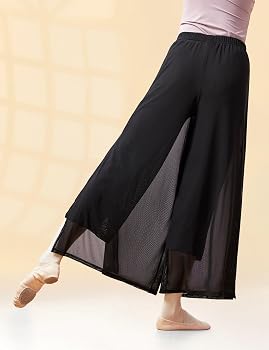
A wide leg changes how movement reads. That is the entire appeal, and it is also the reason the wrong pair fights you for an hour. Choosing cargo dance pants that work in a studio rather than only in a mirror comes down to a handful of construction details that determine whether the fabric moves with the body or slightly behind it, and whether you spend the class dancing or adjusting.
Volume is a stylistic choice, not a neutral one
Loose fabric adds visual weight and delay to movement. In hip-hop, commercial, and street styles, that is doing useful work: it exaggerates isolations, gives sharp movements a visible follow-through, and reads clearly from the back of a room.
In ballet and much contemporary work, the same volume obscures the leg line the choreography is built around. Neither is right or wrong. It is a question of whether your style wants the extra visual information, and most dancers who train across genres end up owning both silhouettes rather than choosing between them.
The ankle is where wide legs fail
Excess fabric at the floor is the single most common problem. It catches under sneakers, drags during floorwork, and turns a slide into a stumble.
Look for a genuine solution rather than a hem. Toggles, drawcords, and elasticated cuffs all let you pull the volume in when the choreography needs your feet visible, then release it when it doesn’t. Adjustability at the ankle is the difference between a pair you wear to every class and a pair you wear only to the ones without footwork.
Convertible designs take this further, using removable zippered sections so the same pair works at multiple lengths. If you train across styles, that flexibility earns its cost quickly.
Fabric weight and the timing problem
Fabric has momentum. Too heavy, and it swings on its own schedule, arriving after your body has already moved on, which blurs anything sharp. Too stiff, and it resists rather than follows, which is worse: you feel it in every deep bend.
What you want is fabric with enough body to create visible movement and enough stretch to disappear when you need it to. Test it by dropping into a deep squat and standing straight back up. If the pants resist at any point in that arc, they will resist all class.
Pockets need to be assessed, not admired
Cargo pockets are the defining feature and the most variable in quality.
Check three things. Whether they lie flat against the leg when empty rather than standing away and flapping. Whether they close, because an open pocket during an inversion empties itself onto the floor. And where they sit, since a pocket positioned directly on the outer thigh will make contact during floorwork and you will feel every seam.
Waistband and rise decide the floorwork
The waistband has one job: stay where it started. Test it by rolling backward onto your shoulders and coming back up. Anything that migrates during that will migrate all rehearsal.
A hidden drawstring inside an elastic waistband is the practical answer, giving you a secure fit without an external tie that presses into the abdomen during floorwork or catches during partnering.
Rise matters for the same reason. You need room to kneel, sit, and go to the floor without the seat pulling. Check it in a full kneel rather than standing.
Where wear actually happens
Knees and seat take the abrasion in any style involving floorwork, so look at the fabric density in those areas and at whether seams sit where the body contacts the floor.
Tiger Friday builds its Recruit cargos around exactly these considerations, with ankle adjustment, secured pockets, and construction manufactured in the United States for repeated studio use rather than occasional wear.
Test any pair in motion before you commit, and the wide leg becomes an asset instead of something to manage.
