

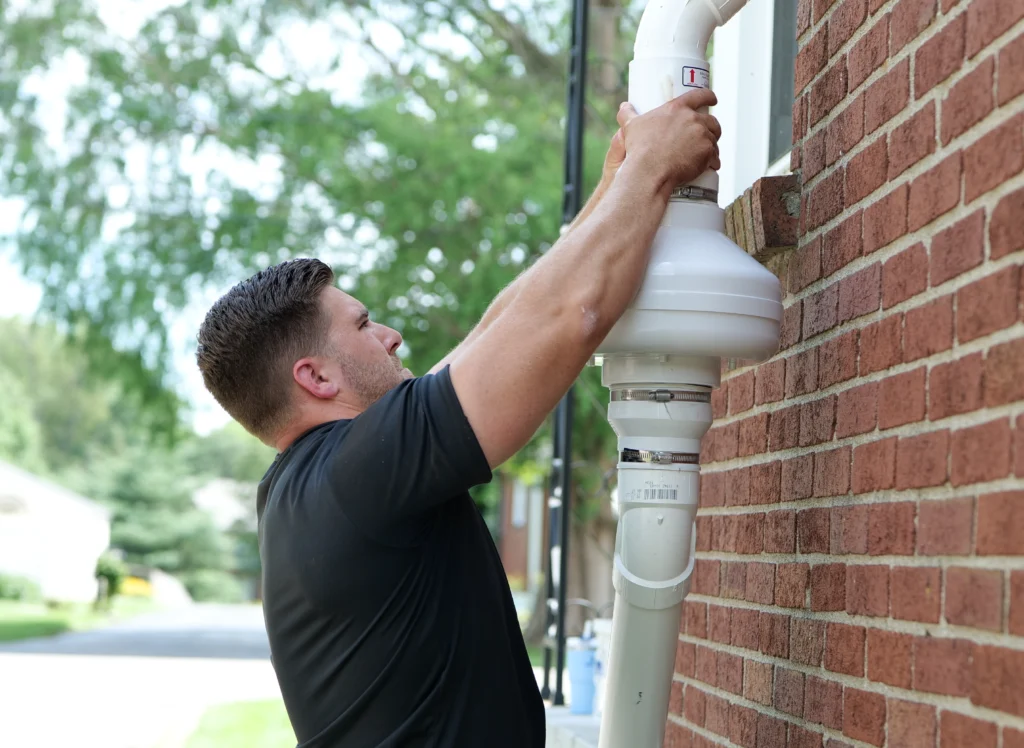
Radon reduction depends on more than placing a fan on a length of PVC pipe. The fan must create enough suction beneath the building while operating continuously under changing weather and soil conditions. Choosing a suitable Radon Mitigation Fan Kit can help contractors and property owners assemble the main system components while maintaining consistent airflow through the vent pipe.
Understanding the Fan’s Role in Radon Reduction
Radon can enter a building through cracks, floor joints, sump openings, pipe penetrations, and other gaps connected to the soil. Sub-slab depressurization addresses this problem by creating negative pressure beneath the foundation.
A suction point is installed through the slab or connected to a sealed crawl-space membrane. The fan then draws soil gas into a PVC pipe and discharges it above the building, where it can disperse outdoors.
The fan is the working center of this system. If it cannot overcome resistance within the soil and piping, the pressure field may not extend across the required foundation area. Contractors must therefore consider site conditions instead of selecting equipment solely by pipe diameter or fan price.
Match Pressure and Airflow to Site Conditions
Radon fans differ from general ventilation fans. They must move air while maintaining suction against resistance created by compacted soil, aggregate, pipe fittings, and foundation layout.
Loose gravel beneath a slab may allow air to travel relatively freely. Dense clay, tightly packed fill, or divided foundation sections can create greater resistance. Some properties may also require more than one suction point.
A diagnostic pressure-field extension test can help a qualified installer determine whether suction reaches the necessary areas beneath the slab. These findings guide fan selection and suction-point placement.
Contractors should also account for:
- The type and condition of the sub-slab material
- The number and position of suction points
- Pipe length, diameter, and fitting count
- Foundation walls or footings that divide the slab
- Crawl spaces connected to basement sections
- Expected moisture and outdoor temperature exposure
Selecting an oversized fan without testing is not always the answer. Excess suction may increase noise, energy use, and conditioned-air loss if foundation openings are not properly sealed.
Choose a Fan Rated for Continuous Operation
A radon fan normally runs 24 hours a day. Its motor and housing must therefore be rated for continuous use. A standard household exhaust fan is not designed for the pressure demands or operating schedule of a radon reduction system.
Contractors should check the product listing, operating location, electrical requirements, and manufacturer instructions before installation. The fan must also be compatible with the intended indoor or outdoor placement.
Long-term service matters because a stopped fan can allow radon concentrations to rise again. Property owners should be shown how to check the system indicator and recognize unusual vibration, noise, or loss of suction.
Plan Fan Placement Carefully
The fan should not be installed in or below an occupied area where a leak could release concentrated soil gas indoors. Common locations include an unfinished attic, garage, or the exterior of the building, subject to applicable codes and installation guidance.
Outdoor installations also need protection from site hazards. Water, snow, leaves, nesting animals, and other debris can damage the fan or restrict the exhaust. The discharge point must be positioned to reduce the chance of radon re-entering the building through windows, doors, or ventilation openings.
Installers should keep pipe runs as direct as practical. Unnecessary bends add resistance and may reduce system performance. Pipes should also be supported to prevent movement, stress, and vibration transfer.
Control Noise and Vibration
Fan sound can become a concern when vent piping runs near bedrooms, offices, decks, or neighboring properties. Noise may travel through both the air and the building structure.
Flexible anti-vibration couplers help isolate the fan from rigid PVC piping. Secure pipe supports can further reduce rattling and movement. When possible, the fan and discharge should be positioned away from quiet indoor areas.
Unexpected noise after installation may indicate loose fittings, pipe contact with framing, debris in the fan, or operation outside the intended performance range. It should be investigated rather than accepted as normal.
Check What the Installation Kit Includes
A kit can make equipment planning easier, but installers should confirm its contents before arriving at the job. Depending on the product, additional PVC pipe, fittings, roof flashing, sealant, wiring materials, fire-stopping components, or system labels may still be required.
The completed installation should include a visible pressure indicator, such as a manometer, so occupants can confirm that the fan is creating suction. Clear system labels and basic operating instructions also help future owners, inspectors, and service technicians understand the installation.
Verify Performance After Installation
Finishing the pipework does not confirm that indoor radon has been reduced sufficiently. The property should be tested again after the system is operating, following the timing and test conditions recommended by the relevant authority.
Future testing is also worthwhile after major renovations, foundation work, HVAC changes, or long periods of fan shutdown. A radon system needs continued observation, even when the fan appears to be running.
Contractors, mitigation specialists, and property owners can review fan kits designed for continuous sub-slab depressurization by visiting Suncourts. Compare the available equipment with the property’s diagnostic findings, installation layout, and local requirements before selecting a system.
